Morocco Declares State of Disaster in Four Provinces After Severe Floods, Launches 3 Billion Dirham Support Program
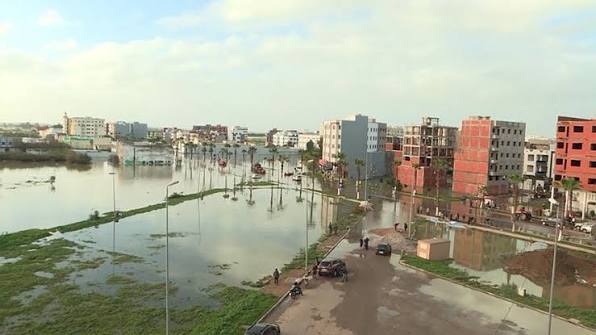
Following two months of exceptional weather disturbances across the Kingdom, particularly in the Gharb and Loukkos regions, King Mohammed VI has instructed the government to implement a large-scale assistance and support program for affected households and communities.
According to a statement from the Head of Government, an official decision has been issued declaring these disturbances a state of disaster and classifying the provinces of Larache, Kenitra, Sidi Kacem and Sidi Slimane as disaster-stricken areas.
A State of Disaster in Four Hard-Hit Provinces
The unprecedented weather conditions resulted in widespread flooding that submerged more than 110,000 hectares of land and forced the evacuation of nearly 188,000 residents across the four provinces. Entire agricultural zones were inundated, road networks were damaged, and thousands of families were temporarily displaced.
The government emphasized that the declaration of a state of disaster allows for the activation of exceptional legal and financial mechanisms to accelerate intervention and reconstruction efforts. Additional details on national disaster management frameworks can be found through Morocco’s official portal at maroc.ma.
A 3 Billion Dirham Comprehensive Support Plan
Based on a thorough field assessment and a detailed study of the economic and social consequences of the floods, the government has prepared a large-scale program with an estimated budget of 3 billion Moroccan dirhams.
The program is structured around four main pillars designed to ensure both immediate relief and long-term recovery.
Housing Rehabilitation and Income Compensation
The first pillar, with a total allocation of 775 million dirhams, focuses on housing support and income compensation. It includes assistance for rehousing affected families, compensation for loss of income, rehabilitation of damaged homes and small commercial premises, as well as the reconstruction of completely collapsed houses.
This component aims to restore social stability by enabling families to return to safe living conditions as quickly as possible, while also supporting small local businesses that form the backbone of the regional economy.
Emergency Field Interventions and In-Kind Assistance
The second pillar allocates approximately 225 million dirhams for urgent field interventions and in-kind support. These measures are intended to meet the immediate needs of the affected population, including food, temporary shelter, medical support and essential supplies.
Authorities have stressed that coordination between local administrations, civil protection services and social actors will be key to ensuring efficient distribution of aid.
Support for Farmers and Livestock Breeders
The third pillar provides 300 million dirhams in assistance to farmers and livestock breeders. The floods caused significant agricultural losses in a region known for its strategic contribution to national food production.
Support measures are expected to include compensation mechanisms, rehabilitation of damaged farmland and assistance in restoring livestock activities. Broader agricultural recovery policies can be explored through the Ministry of Agriculture at agriculture.gov.ma.
Infrastructure and Hydraulic Network Rehabilitation
The fourth and largest pillar, amounting to nearly 1.7 billion dirhams, will finance investments to rehabilitate road infrastructure, hydro-agricultural systems and essential public networks. This includes restoring damaged roads, reinforcing drainage systems and rebuilding critical public facilities.
Infrastructure resilience has become a central issue in the face of increasingly frequent extreme weather events, aligning with broader climate adaptation strategies discussed by international organizations such as the World Bank (worldbank.org).
Royal Directives for Swift and Responsible Implementation
King Mohammed VI has instructed the government to implement the program with efficiency, speed and a strong sense of responsibility. The objective is to allow residents of the affected areas to return to normal life as soon as possible and to restore economic activity in the region.
The announcement underscores the importance of coordinated national solidarity and institutional responsiveness in times of crisis. As recovery operations unfold, attention will focus on the transparent management of funds and the rapid execution of reconstruction projects.
The coming months will be decisive in determining how effectively the program mitigates the long-term social and economic impacts of one of the most significant weather-related disasters the region has experienced in recent years.
Was this article helpful?
0 helpful · 0 not helpful
Lbanka Team
Content creatorRelated post:
- CNSS Uncovers Fake Employment Scheme Involving Bank Executives in Rabat
- Morocco’s Tax Authority Intensifies Audits Over Hidden Income Through Third-Party Bank Accounts
- Morocco Launches Probe Into Suspected Money Laundering Through Failed Import Deals
- CIH Bank Warns Against Sophisticated Scams Exploiting Migration Dreams
- Rising Digital Fraud in Moroccan Banks Raises Questions About Liability and Customer Compensation